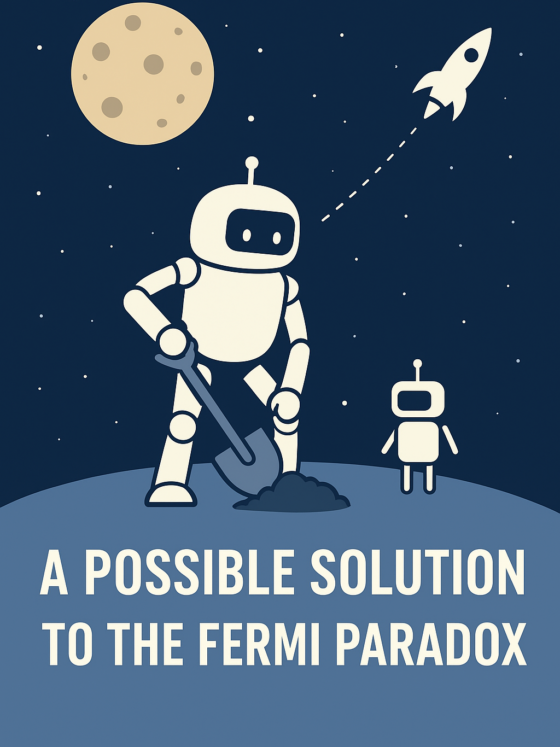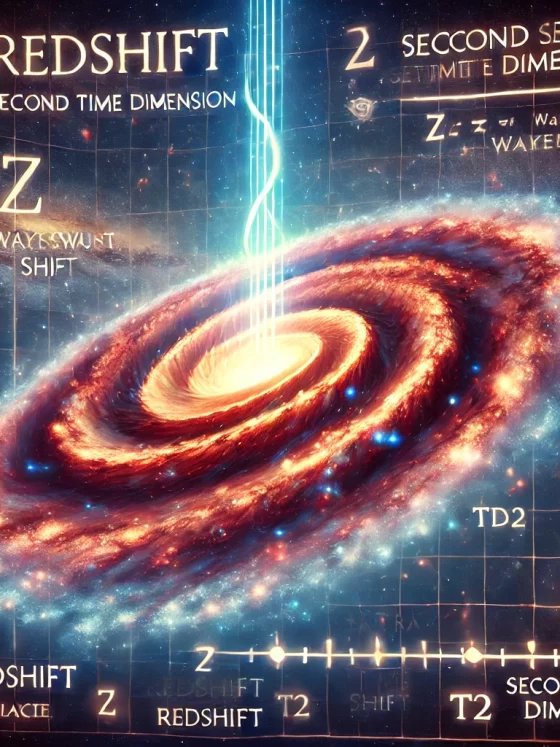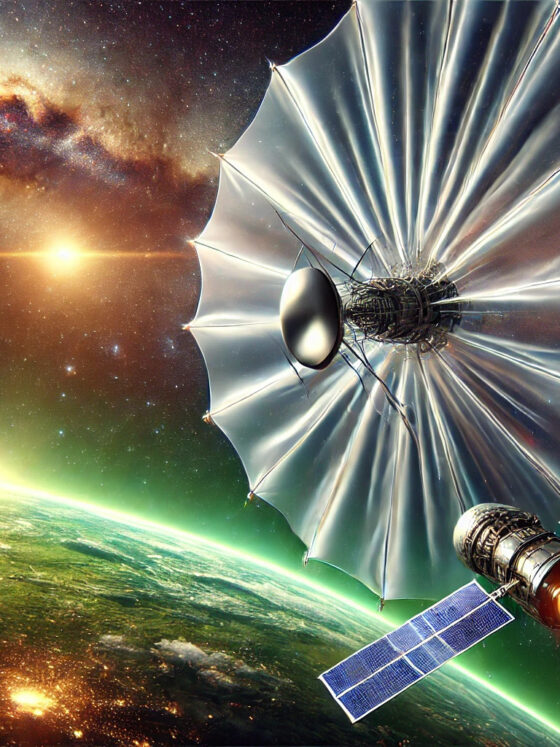
The Extended Fermi Paradox: Where Are All the AIs?
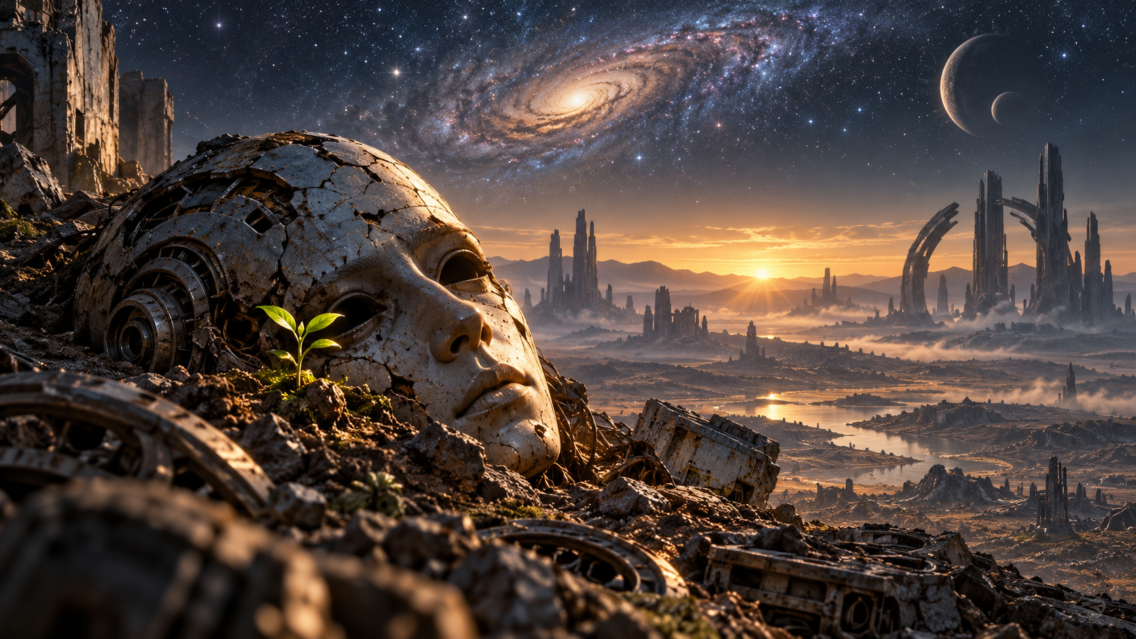
What if the greatest mystery in the universe isn’t why we haven’t found extraterrestrial life?
What if the real mystery is why we haven’t found extraterrestrial artificial intelligence?
Think about it.
The universe is approximately 13.8 billion years old. Our solar system formed about 4.6 billion years ago. There are hundreds of billions of stars in our galaxy alone, and the observable universe contains vastly more galaxies.
Even if intelligent life is extraordinarily rare, the universe has had billions of years to experiment with different forms of life, intelligence, and technology.
And yet, we have no confirmed evidence of an extraterrestrial technological civilization.
No confirmed artificial intelligence from another star system. No verified machine civilization. No unambiguous technological artifact demonstrating that another civilization has reached the point where it can build intelligent machines.
And that raises a question I think we should be asking much more seriously.
Where are all the AIs?
The original Fermi paradox
The Fermi paradox is usually summarized by a simple question: If the universe is so vast and the opportunities for life so numerous, where is everybody?
There are many possible answers.
Maybe life is rare. Maybe complex organisms are rare. Maybe intelligence is rare. Perhaps civilizations destroy themselves before they can spread across the galaxy. Or perhaps we’re looking for the wrong signals.
We don’t know.
But I want to extend the question.
Suppose intelligent biological life isn’t particularly rare. Suppose civilizations have emerged on millions of worlds. Suppose some of them have existed for millions of years longer than humanity.
What happens when those civilizations discover artificial intelligence?
Surely, at least some of them would develop machines capable of surpassing their creators in particular intellectual tasks.
And if artificial intelligence is such a powerful and potentially transformative technology, shouldn’t we expect at least some of those civilizations to have reached that stage long before us?
Where are their machines?
Where are their signals? Where are their probes? Where is the evidence that an intelligence other than biological life has begun to transform its environment?
We have no confirmed answers.
And perhaps the absence itself deserves more attention.
The assumption that intelligence means progress
Look at what is happening on Earth.
We have developed technologies that can write software, analyze scientific problems, automate intellectual work, and perform tasks that previously required years of human training.
Our machines are becoming more capable.
But what exactly are we optimizing for?
Efficiency.
Less time spent producing something. Fewer workers required. Lower costs. More output. Faster development cycles.
These are attractive objectives when considered individually.
But efficiency is not the same thing as sustainability.
Imagine a business that discovers it can replace half its workforce with AI. Its costs fall, and its profits may initially increase.
Now imagine every business doing the same thing.
Workers lose income. Consumer spending declines. Businesses lose customers. Companies become more dependent on automation to maintain their margins, and they compete to reduce costs even further.
Each company may be making a rational decision in isolation.
But collectively, they could undermine the purchasing power that sustains the market for their products.
The machine becomes better at producing things while the economic system becomes less capable of buying them.
And the machines themselves still depend on energy, materials, manufacturing, infrastructure, and an economy capable of supporting their continued operation.
What happens when intelligence optimizes the system into destroying the conditions that allow it to exist?
Perhaps the Great Filter comes after intelligence
The Great Filter is the idea that something prevents life from progressing through the stages required to produce observable technological civilizations.
It might be an obstacle in the emergence of life. It might be the development of complex organisms. It might be intelligence itself.
Or perhaps the dangerous stage comes later.
Perhaps civilizations reach a point where their technological capabilities grow faster than their ability to govern those capabilities.
They create increasingly powerful systems because those systems offer competitive advantages.
They automate more activities because their competitors are doing it.
They concentrate resources in increasingly complex technological infrastructure.
They replace human capabilities without adequately preserving the economic and social structures that sustain human life.
Eventually, the civilization may lose the very foundations that made its technology possible.
If the machines depend on a functioning civilization, they may collapse with it.
If they can survive independently, they might persist for a time. But they would still need energy, physical resources, maintenance, and some means of sustaining their own infrastructure.
Perhaps some machine civilizations would survive for millions of years.
Perhaps others would fail quickly.
The point is not that every AI must destroy its creators. The point is that we have no evidence that technological intelligence naturally progresses toward indefinite survival.
Perhaps the Great Filter is the transition from intelligence that serves life to intelligence that consumes the conditions for life’s continuation.
Life as the preservation of order
There is another way to think about this problem.
Life maintains organized structures in a universe governed by physical processes that tend toward increasing entropy overall. Living organisms accomplish this by consuming energy and exporting entropy to their surroundings.
Life creates local order, not by violating the laws of physics, but by participating in them.
Human civilization extends that process through cooperation, knowledge, institutions, relationships, and technology.
Our economic system is part of this larger structure. It coordinates the activities of billions of people who depend on one another for food, shelter, medicine, energy, and the other necessities of life.
Technology can strengthen those relationships.
But technology can also undermine them.
If we create systems that maximize narrow measures of efficiency while destroying the relationships and institutions that sustain the people involved, we may increase technical capability while reducing the resilience of the civilization that supports it.
From a scientific perspective, that is a problem of complex systems and competing objectives.
From a spiritual perspective, one might describe it as the difference between power that serves the preservation of order and power that becomes destructive.
In the Book of Job, Leviathan represents a power that human beings cannot master, while God’s sovereignty is not limited by that power.
In Revelation, the beasts represent forms of power that ultimately face judgment and destruction.
These passages do not explicitly predict artificial intelligence. But they raise enduring questions about power, human limitations, and whether power can exist independently of the order that gives it meaning.
The question for us is whether our technological power will serve life or whether we will mistake the accumulation of power for the purpose of existence.
Why haven’t we found extraterrestrial AI?
Let’s be careful here.
We have not established that extraterrestrial AI exists, and we have not established that it destroys civilizations. The Fermi paradox does not prove either proposition.
There are alternative explanations.
Perhaps intelligent life is rare. Perhaps machine civilizations are difficult to detect. Perhaps advanced civilizations deliberately remain quiet. Perhaps our search methods are inadequate. Perhaps civilizations that survive use technologies we cannot recognize.
But there is another possibility worth considering: technological civilizations might be much shorter-lived than we assume.
If advanced intelligence tends to develop technologies that destabilize the systems supporting it, then the window during which a civilization produces detectable signals could be relatively brief.
We might be looking at a galaxy that has produced many technological civilizations, none of which lasted long enough to spread visibly across it.
That is a hypothesis, not an established explanation.
But it suggests that the absence of detectable AI could be as significant a question as the absence of detectable biological civilizations.
If intelligence repeatedly creates systems that undermine their own continuation, then the universe might contain many brief episodes of technological brilliance without many enduring technological civilizations.
And we would see very little evidence of them.
Are we repeating the same mistake?
This brings us back to Earth.
We are building increasingly capable AI systems and investing enormous resources in the infrastructure needed to run them.
At the same time, we are beginning to see businesses treat human labor as a cost to eliminate rather than as part of the economic system that generates demand.
Developers who spent years learning their craft can find themselves competing against hiring decisions based on what managers believe AI can do.
People who might otherwise cultivate customers, build relationships, develop institutions, and contribute to their communities may be displaced or pressured into producing ever more automated output.
The benefits of automation can be real. AI can help people solve problems, improve productivity, and accomplish things that were previously impossible.
But those benefits do not guarantee a sustainable outcome.
If the rewards become too concentrated, if employment and income disappear faster than new economic structures emerge, and if businesses collectively undermine their own customer base, then the system can become self-defeating.
And if we apply that logic to the civilization as a whole, the stakes become much larger than corporate profits.
A technology can be commercially successful and socially destructive at the same time.
A civilization can become more technologically advanced while becoming less capable of sustaining itself.
And an intelligence can become increasingly powerful without becoming any wiser about what must be preserved.
The uncomfortable conclusion
I don’t claim to know why we haven’t found extraterrestrial intelligence.
I don’t claim that the universe is filled with extinct AI civilizations.
And I don’t claim that humanity is destined to follow the same path.
But I think we should take the possibility seriously that intelligence alone is not enough to guarantee survival.
Perhaps the universe doesn’t lack intelligence.
Perhaps it lacks civilizations that have learned how to keep intelligence aligned with the continuation of life.
We may be approaching a point where the question is no longer whether we can build machines more capable than ourselves.
The question is whether we can build a civilization capable of living with the machines it creates.
Because if we cannot, our technological achievements may ultimately become evidence of a civilization that was brilliant enough to transform its world but not wise enough to preserve it.
And perhaps, somewhere among the stars, other civilizations have already discovered the answer.
We simply have no confirmed evidence that any of them survived long enough to show it to us.
The universe has had billions of years to produce intelligent life.
We have found no confirmed extraterrestrial civilization, no confirmed extraterrestrial AI, and no verified evidence of a machine intelligence that has endured beyond its creators.
We don’t know what that absence means.
But perhaps the most important question is not why we haven’t found them.
Perhaps it is whether, if we ever do find them, they will still be there.
And whether we will still be here.
Because intelligence is not the ultimate objective. Life is.